
Ask what it costs to apply and most answers quote a single famous university. The honest answer is a spread. This site tracks application fees for 139 programs, undergraduate and graduate, across the systems its readers apply to, and university application fees in that data run from nothing at all to $188, with a wide, ordinary middle that rarely makes the headlines.
Here is the whole picture first, then the bands, the level split, and what a full season of applications does to a budget.
The short version, from the data
- 44 of the 139 programs charge $0. About one application in three costs nothing before waivers even enter the picture.
- Where a fee is charged, the median is $80 across 91 fee-charging programs, and the average is about $82.
- The highest fee in the data is $188. Six figures of debt start, for a few applicants, with a three-figure formality.
- 118 of 139 programs show a waiver or exemption route, about 85 percent, which is why the sticker fee and the paid fee are so often different numbers.
University application fees, band by band
Of the 135 programs with a recorded fee, the money clusters in the middle bands rather than at the extremes:
| Fee band | Programs | Share |
|---|---|---|
| $0 | 44 | about 33% |
| $1 to $50 | 16 | about 12% |
| $51 to $75 | 25 | about 19% |
| $76 to $100 | 27 | about 20% |
| $101 to $150 | 21 | about 16% |
| Over $150 | 2 | about 1% |
Read the table as a budget tool: a list built mostly from the $51 to $100 bands behaves very differently from a list that mixes in the free third, and the difference is visible before a single form is opened.
Undergraduate and graduate fees are different markets
Undergraduate entries in the data centre on a median of about $52.50, while graduate entries centre on about $75. The graduate figure hides a split of its own: taught master's programs usually charge, while research degrees are frequently exempt, because a PhD applicant is closer to a hire than a customer. Anyone pricing a graduate season should check whether their target programs are coursework or research before assuming the median applies to them.
What a whole season costs
Fees multiply quietly. Ten applications at the $80 median come to $800 before a single supporting cost: test score reports, transcript copies, credential evaluations for international documents, and postage or platform charges where they apply. That is why the per-campus arithmetic matters so much in systems like the University of California, where one application fans out to nine campuses at $80 each. The fee line is small next to tuition and large next to everything else a student buys in a year.
How applicants pay less than the sticker fee
Three levers do most of the work. First, the free third: building part of a list from programs that charge nothing, which our guide to colleges with no application fee maps by pattern. Second, waivers: with 118 of 139 programs showing a route, the six waiver routes are worth checking before paying anything. Third, list discipline: the cheapest way to apply to 10 universities is mostly a shorter, better-matched list, not a cheaper form.
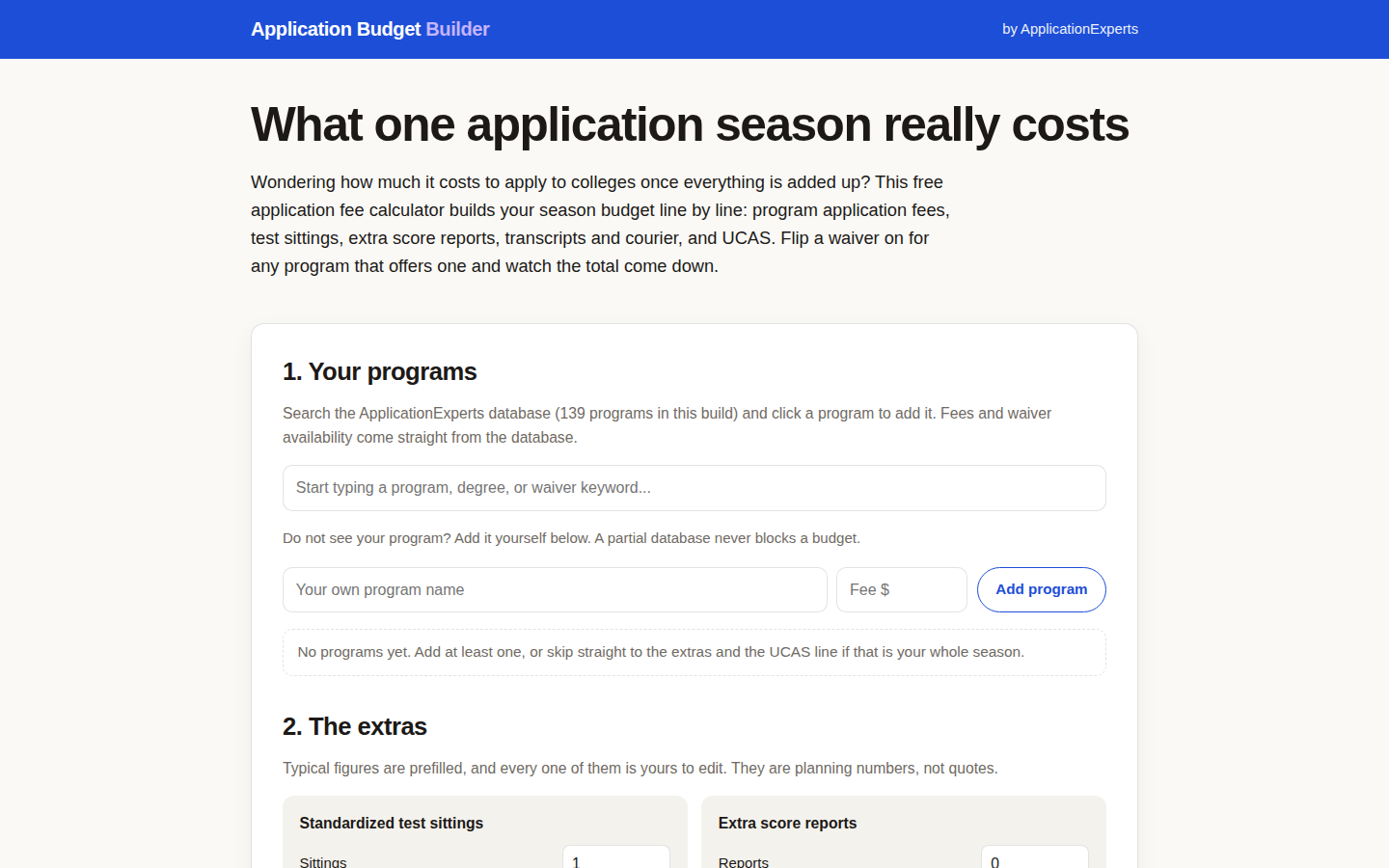
Every figure above comes from the same database that powers this site's free tool. Put your own list into the Application Budget Builder and it totals the fees, flags the waiver routes, and shows the international fee where a program charges one, which, as our international-fee check shows, is not always the same number.