
Lists of colleges with no application fee tend to be long, stale, and silent about why the fee is missing. The pattern matters more than the names, because the pattern tells you whether a free application will still be free next cycle, and whether it is free for you. In this site's database of 139 programs, 44 charge $0, about one in three, and they cluster in five clear places.
1. Public systems in Europe, for European applicants
The largest cluster is not a marketing offer. In much of the EU and EEA, public universities simply do not run an application-fee line for their own applicants, who apply through national portals. The fee is absent because the system never built one, which makes these the most durable free applications in the data, and, as the catch below explains, the most conditional.
2. Australian research degrees and sponsored applicants
Australian entries in the data exempt whole categories rather than running promotions: honours and postgraduate research programs at UNSW carry no fee, the University of Sydney exempts its current students and fully sponsored applicants, and UTS exempts its own progressing students. Research and sponsorship, not generosity, are the mechanism: the program expects funding or a supervisor relationship to do the filtering.
3. Current and returning students
Universities waive fees for their own. Alumni applying for a second degree, students progressing from a pathway college, and returning students appear again and again in the exemption rules. If you have any prior enrolment anywhere on your list, it is the first thing to check.
4. Fees that come back on enrolment
A smaller group charges a fee that is credited toward the tuition deposit once the program starts. It is not free to apply, exactly, but for an applicant who enrols it nets to zero, and it belongs on a free list with that note attached.
5. Hardship and pipeline waivers that act like no fee
Strictly these are waivers rather than absent fees, but from the applicant's side of the checkout they are the same $0. With 118 of 139 programs in the data showing a waiver or exemption route, the line between "no fee" and "fee, waived" is worth less than the checking.
The catch: free for whom?
Thirteen programs in the data are free for domestic or EU applicants and charge international applicants between $70 and $116 for the same application. A no-fee list written for domestic readers can be quietly wrong for everyone else, which is why our international check of the no-fee claim exists. The rule that survives every list: a program is only free for you if its fee line says so for applicants in your category.
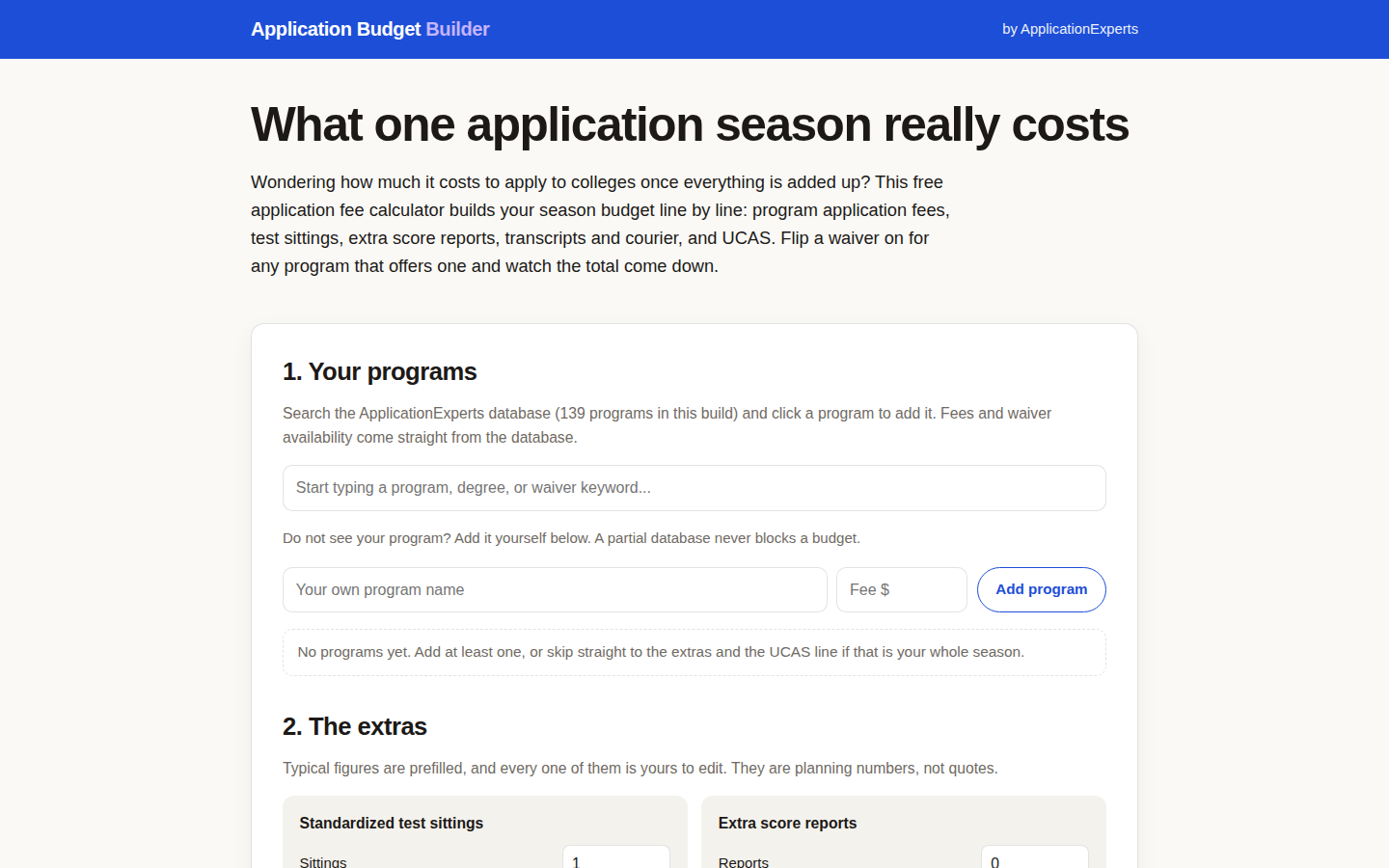
For the dated version of the list, see universities with no application fee in 2027, and before you rely on any entry, run it through the Application Budget Builder, which shows the fee, the waiver flag, and the separate international fee for each program it tracks.