

Nobody tells you this about application fees: they punish procrastinators. The same season, at the same schools, costs a third as much for the student who started a year early. That is not a discount the schools advertise. It is what an application roadmap quietly does. The profile work gets the attention, but the financial logistics decide what the season costs, and every fee lever (waivers, free score reports, zero-fee programs) has a deadline months before the application deadline itself.
Start with the fee landscape, not the school list
Our Budget Builder database tracks 139 program entries. Split by level, the picture every roadmap should start from looks like this:
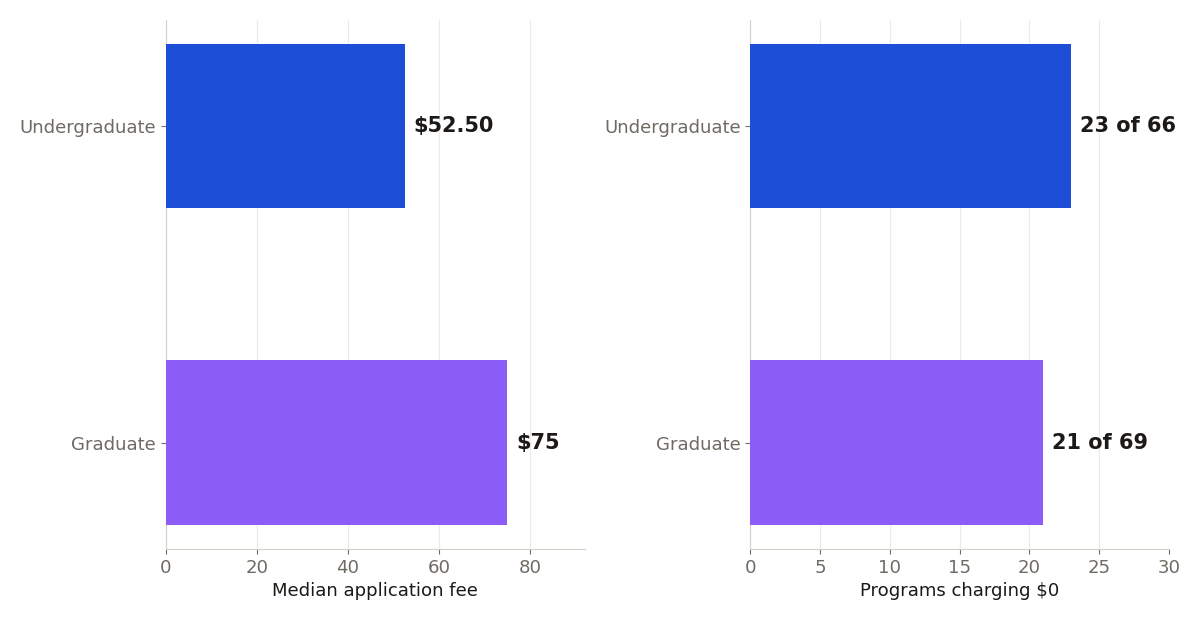
Undergraduate programs median $52.50; graduate programs median $75. More useful than either median is the left edge of the market: 23 of 66 undergraduate programs and 21 of 69 fee-recorded graduate programs charge nothing at all. Forty-four zero-fee programs is a pool big enough to hold three or four places on any balanced list, but only if the list is built early enough to include them on merit rather than as a last-minute rescue. A roadmap that starts in the deadline month never sees this market. It sees whatever is left.
The twelve-month application roadmap
- Month 12: finalize the school list with three fee-free schools baked in, chosen while you still have time to judge them properly.
- Month 10: talk to your counselor about Common App and NACAC waivers. They are bulk-processed in the fall, and the conversation is easier before the rush.
- Month 8: identify which schools need a WES evaluation and which do their own credential review. Paying for an evaluation a school never asked for is pure waste.
- Month 6: use GRE and TOEFL free score reports strategically at registration. The free sends expire; the paid ones are forever.
- Month 4: send direct waiver emails to the small colleges on your list. Many grant them case by case, and almost nobody asks.
- Month 2: verify every fee and waiver on each admissions page. Policies change between cycles, and last year's number is a rumor.
What the early start is worth
Students who run this roadmap spend $150 to $250 on a ten-school season. Students who start in the deadline month spend $700 or more, on the same schools with the same ambition. The gap is not talent or luck. It is the waiver requested in time, the free score report used before it expired, and the zero-fee program that was on the list from the beginning instead of discovered in a panic. Profile-building works the same way, incidentally: the projects, scores, and recommendations that make an application strong are also twelve-month projects. One calendar holds both, which is why the roadmap and the budget belong on the same page.
Two more lines on the roadmap are worth their own months. The first is the international column. Eighty-six entries in the database record a separate international fee, and 15 charge international applicants more than domestic ones, in a few cases moving a program from $0 at home to $70 or more abroad. If you are applying from outside the country a program sits in, that check belongs at Month 12, when the list is still fluid, not at payment time. The second is the waiver census itself: 118 of the 139 programs list a waiver or exemption route. Waivers are not rare exceptions for a lucky few. They are the normal state of the market, and the roadmap simply treats them that way, one scheduled request at a time.
Put the roadmap on one page
A roadmap you cannot see is a wish. Lay the season out with the free Application Budget Builder: every program on your list with its fee, its waiver route, and the running total, next to the profile milestones for the same months. The companion guide on what to look for in profile-building roadmap apps covers the tracking side, and our season cost breakdown shows where a full budget goes. Start both clocks a year early, and the fees genuinely do take care of themselves. Sources: Common App